

 Art by Clark Miller
Before Buyout Offer, a Boardroom Feud Festered at Grindr
The app's controlling shareholders have sparred with the board and company executives over financial and governance issues as well as general strategy.
The week before Halloween, Grindr, the gay dating-and-hookup app, threw a big party near New York’s Chelsea neighborhood—its second annual Pleasure Ball. The theme: sexy garden, essentially. (“Nature’s gay and it’s hungry,” read the invitation.) Attendees showed up as scantily clad gnomes and fawns, and the crowd included influencers, New York advertising executives and Grindr CEO George Arison, who went attired in a velvet blazer affixed with bug-shaped brooches.
Entirely absent from the evening’s fun were the two straight men trying to take control of Grindr’s future: James Lu, then Grindr’s boardchair, and Raymond Zage, a longtime Singapore-based financier, who had both received invites.
If they had shown up, it would’ve made for an awkward time. Lu and Zage have long owned more than 60% of publicly traded Grindr, but a week before the party, news of their plan to purchase the rest of Grindr and take it private had leaked, sowing distrust within the company and its board. Soon after, Arison pushed back against their proposal, and he said at the company’s all-hands meeting that he didn’t think Lu and Zage’s plan was best for the company, according to two people who attended. One concern on Arison’s mind was whether the company would lose employees and executives lured by the prospect of public company stock, three employees said.
The potential buyout, which was partly prompted by a monthslong stock slide and a margin call on the shares Lu owned, is just the latest chapter in the globe-spanning drama around Grindr. Lu and Zage have clashed with other board members over financial and governance questions extending back to 2024, according to conversations with six people close to the board. In particular, Zage was upset last year after a special board committee ruled he would have to pay more than $100 million of cash to exercise additional shares, a fight that soured some of the board’s key relationships.
Those tensions stayed behind the scenes when Grindr’s stock shot up earlier this year as earnings and revenue both swelled, with the company selling more subscriptions to premium features that give users the ability to message an unlimited number of profiles and to send disappearing photos. (Analysts expect it to generate more than $430 million in sales this year, largely from subscriptions.)
Then its stock crashed—with short sellers piling in—after quarterly user growth slowed. Other problems emerged. In July, Grindr’s chief financial officer, Vanna Krantz, departed. She had told colleagues that the company’s expansion plans, which include new businesses like selling erectile dysfunction medication, presented too many distractions, two people close to the company said.
Around the same time, executives began to realize that software it had been using to ban bots or criminals on the app had eliminated too many legitimate users, including a member of Parliament in the U.K., a person close to the company said. Meanwhile, Grindr users have complained recently about a spike in annoying spam messages.
Zage has expressed optimism about Grindr’s future. He has argued to the company’s executives that taking it private again would help the company escape a quarterly earnings cycle that had turned sour, particularly for a Wall Street crowd that didn’t really use or understand the app. The company has “opportunities to continue improving the breadth and quality of its product offering—there are benefits to being able to execute on that goal through a long-term lens, less influenced by quarterly financial results,” Zage and Lu said in a joint statement emailed by a spokesperson.
These past few months are part of an even more extensive saga of the past decade in which the app has had three separate owners. When it was sold in 2020, that transaction came at the behest of the U.S. government and involved geopolitical tensions between the U.S. and China. Then it went public through a SPAC, the type of loosely regulated investment vehicles widely used in a boom of offerings a couple years ago.
If Zage and Lu, who resigned from his board chair role last week amid his margin calls, succeed in taking Grindr private once again, they could face more questions from U.S. regulators about foreign ownership of the app. Zage, who has lived in Singapore for decades, was born in Illinois but gave up his U.S. citizenship. Lu lives in Los Angeles and is a U.S. citizen, a spokesperson said. He spends significant time in China, three people close to the board said.
In the coming weeks, the board’s decision of whether to accept Zage and Lu’s $18-a-share offer, which is about 25% above where Grindr shares are trading, will fall to a special committee that will have to weigh whether the deal is in the best financial interest of all shareholders. A key piece of the bid is still missing, however: The special committee hasn’t yet received evidence that Zage and Lu have found committed financing for the deal, which could exceed $1 billion of debt, two people close to the board said.
Meanwhile, employees, executives and board members have talked about an additional dynamic: Would selling Grindr to Lu and Zage benefit not just shareholders but the gay community as a whole? Grindr is an unusual brand with a unique set of 15 million monthly active users, the largest publicly traded company to focus solely on a gay-focused audience.
Arison, for his part, told employees the company benefited from Wall Street’s quarterly scrutiny because it helped hold the company to a high standard. And last month he talked publicly in grand terms about how the company’s success as a stock helped further gay rights.
“One way I talk to the team about it is: We’re a close to $5 billion company, and now I can go to the Hill, and I will meet with senators, and they’ll listen to what I have to say,” he said on the Marketopolis podcast. “But imagine if we are a $25 billion company. How much impact would we have on the world that way?”
Last year, Grindr’s board convened for a meeting at a spectacular location: Zage’s hilltop house in Whistler, British Columbia. The modern, minimalist chateau is equipped with its own private ski lift to whisk visitors to the top.
Those who made the trek up the mountain discovered in his basement an object that would presage the sequence of crises to come: a replica of the Iron Throne from “Game of Thrones,” the HBO show.
The group in Whistler had an interesting mix to its composition. The company had appointed five independent directors who were either gay, lesbian, bisexual or transgender. Meanwhile, the two board members with the most authority were Zage, by far the company’s largest shareholder, and Lu, Grindr’s second-largest shareholder.
Grindr had become the biggest financial success for both men, particularly Lu, a former Amazon and Baidu executive who was in his early 40s with business connections in China. He had used creative ways to try to stay close to the product, like making dupe Grindr accounts to test features and give feedback to executives (without actually using it to hook up with men), three people close to the board said.
That was far different from the style of Grindr’s creator, Joel Simkhai, who launched the app at the dawn of the iPhone in 2008 in part to find more nearby men for hookups. He netted hundreds of millions of dollars when he sold the company to Kunlun, a Chinese gaming company, in 2016. Four years later, the U.S. government intervened in the deal and ordered Kunlun to divest itself of U.S.-based Grindr, which had a trove of very sensitive information, like users’ nude photos, steamy chats and HIV status.
That’s where Zage entered the picture. A former hedge funder and Goldman Sachs banker, Zage led the investment group that purchased Grindr from Kunlun for $620 million in 2020. He figured that was a bargain price driven by the forced sales process. Few other investors—whether because of homophobia or concerns about Grindr’s lowbrow reputation—wanted to touch it, even in the gay-friendly tech world, according to people close to the deal.
The next couple years were a rebuilding period for the company. It experienced an immense turnover in its staff as it worked to reduce its reliance on advertising revenue. To lure new subscribers, it also focused on fixing a litany of app glitches, like frequent crashes.
At that point, the company’s three largest shareholders were Zage, Lu and billionaire Michael Gearon Jr., former co-owner of the Atlanta Hawks. All three are straight, so they decided to seek out a gay CEO with the tech and business chops to help take Grindr public: Arison. (Likely an additional point in his favor: He’s a Republican.)
Arison had been looking for a new gig after spending years running the online used car site he founded, Shift Technologies, which had gone public through a SPAC but was running into financial trouble. He joined Grindr in September 2022 just as it was readying to go public through a SPAC owned largely by Zage himself. It started trading on the New York Stock Exchange just a couple months later in November.
As CEO, Arison started to tout a broader vision for the app, wanting to show investors it could be closer to a social media app than a dating or hookup app. He started talking about Grindr as a “gayborhood in your pocket.”
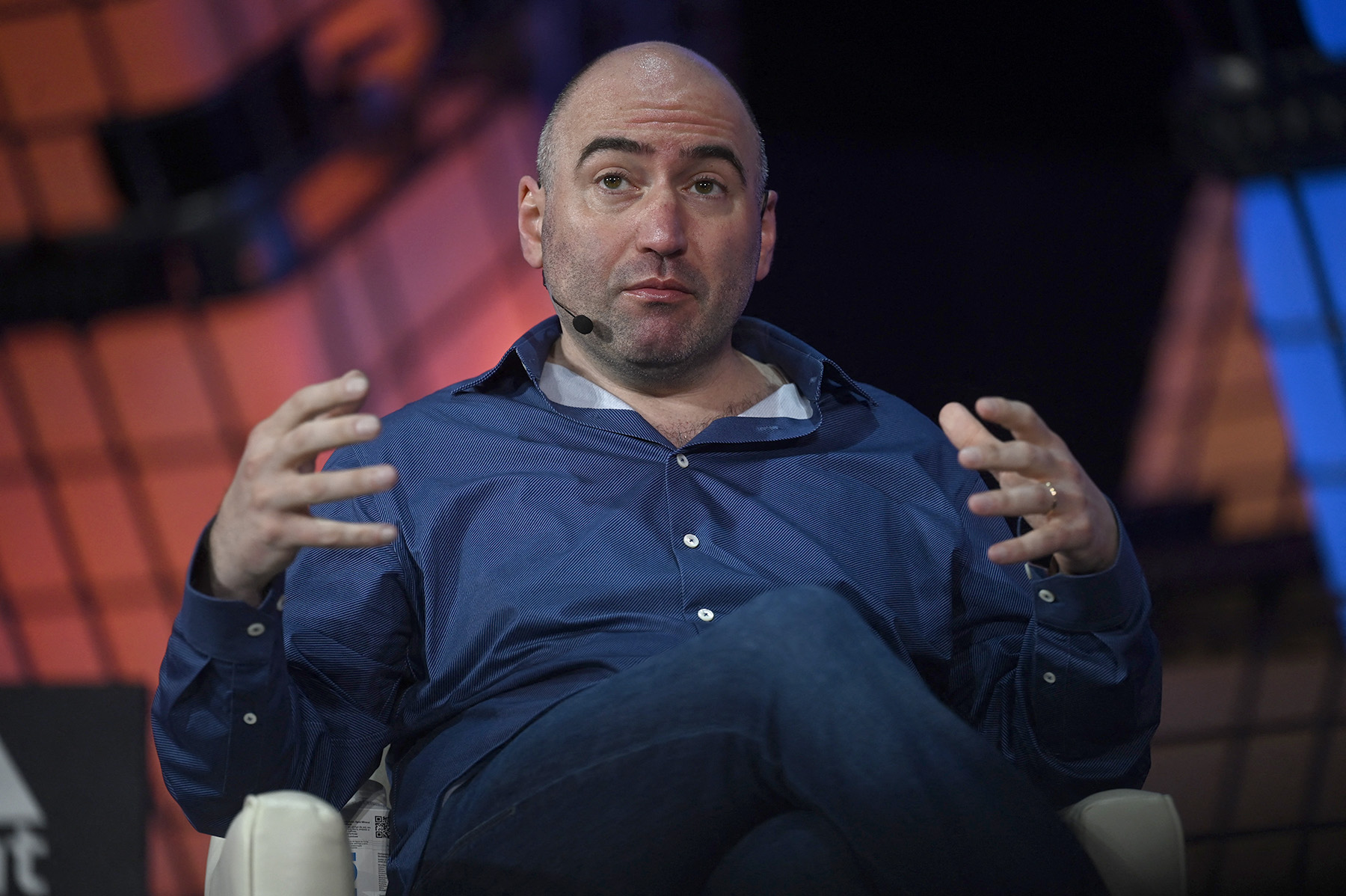
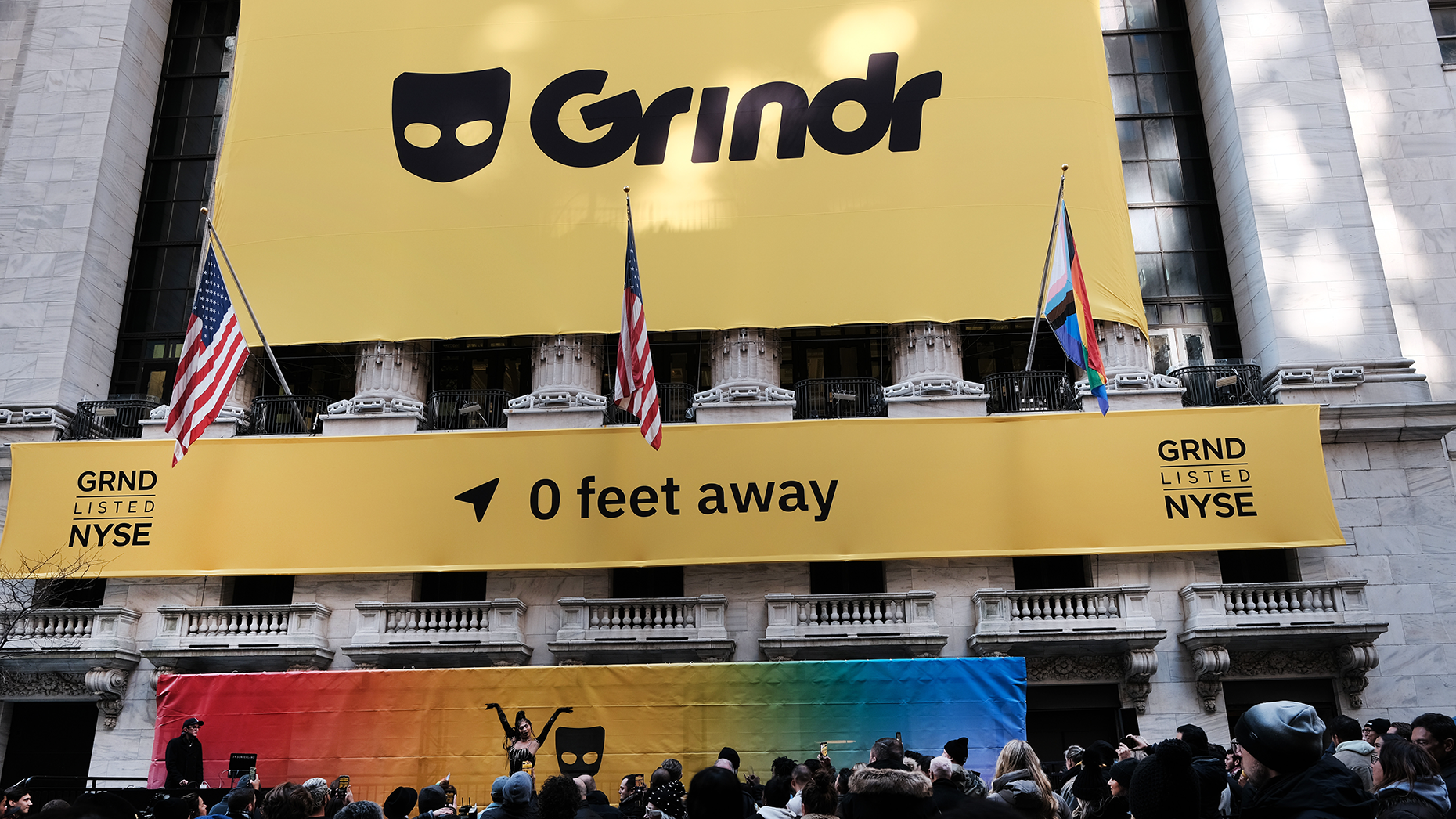
Still, Grindr’s first year as a stock was rocky, and its corporate quirks made winning over the public markets difficult. Choosing to do a SPAC meant the company hadn’t spent weeks on a road show to introduce itself to investors. And its stock still was largely in the hands of just a few shareholders. That made it more vulnerable to share price swings that would scare off investors. For a while, its stock traded below $10 a share, the price at which it went public.
In 2024, however, Grindr’s fortunes started to change as it went on a hot streak of strong quarters, with sales increasing by one-third and free cash flow nearly tripling that year. Grindr’s revenue growth was particularly stark when compared to Match Group and Bumble, the two other publicly traded dating app companies. By the end of that year, those companies were struggling to keep users engaged and attract new ones. But Grindr has the benefit of market dominance—it’s the largest gay-focused app. And it doesn’t have the same problem holding on to users, as its primary function is to facilitate hookups, not dates or monogamous relationships. By the end of 2024, its market cap had climbed past $3 billion for the first time, and its share price was 80% above where it had gone public.
“It’s one of the most amazing products ever built,” Arison told me a couple years earlier. The soaring stock price eventually sent the value of Zage’s stake past $2 billion. Arison and other executives, meanwhile, would get tens of millions of additional stock if the company shot past a $5 billion market capitalization.
The company’s corporate structure and boardroom dynamics, however, were starting to show signs of strain last year. Some board members pushed for Grindr to take stronger pro-gay political stances and sponsor more LGBTQ+ philanthropy events, while others wanted it to focus more on the day-to-day business, people close to the board said.
The tensest debate came last December—a disagreement over whether Zage would have to come up with the cash to exercise more than $100 million worth of stock warrants he had earned from the SPAC deal.
The board, which formed a special committee to settle the matter, argued that the company’s agreement with the investor required him to pay for the additional shares. Zage argued that it didn’t. That would allow the warrants to keep amassing value as the stock price rose, and he wouldn’t have to get the money to exercise them. But the committee ruled that he had to pay, and he grew frustrated and criticized the decision, two people close to the board said.
Grindr’s stock started coming back to earth this past summer—in July, when it dropped 23% over the course of the month, its worst slide since the weeks following its public listing. At month’s end came the surprise departure of Krantz, the CFO, and more unsettling news followed.
In August, Grindr reported a brief slowdown in the growth of monthly active users: just under 6% in the quarter, compared to 7% the same period the prior year. And it had pulled in slightly less revenue than Wall Street had expected.
After the earnings release, executives explained to employees in a meeting one reason for the miss: Grindr had been too aggressive in kicking off real users as its automated software tried to ban bad actors, three people familiar with the matter said.
Misuse of the app had been particularly acute in countries such as Chile, where straight people often use Grindr to coordinate drug deals, and Brazil, where they use it to facilitate prostitution, people close to the company said. Executives struggled for months to resolve the problems and then moved too assertively, cutting off legitimate users in the process, they said.
In September, the topic about Grindr’s relationship with its users came up when Goldman Sachs’ top internet analyst, Eric Sheridan, interviewed Arison onstage at the bank’s investor conference in San Francisco’s downtown Palace Hotel. Sheridan brought up another worry among some investors that the company was frustrating users with too many ads and paywalls and was “harming” user growth. In response, Arison said the perception of a user growth slowdown was misplaced—the company had been focusing on “good” monthly users while cutting down on the increase in spam accounts it had seen in the past year.
Making the problem more glaring was a report in September by little-known short-selling firm Ningi Research, which circulated a report to other investors. Ningi is run by a Swedish former investment banker living in Texas who would only provide his first name, Nick. The short seller, who said he is straight, said he started researching Grindr in April and talked to gay friends about their dissatisfaction with the app, including a growing number of intrusive ads for users who didn’t pay for subscriptions.
“It’s a prime example of enshittification that leads to user exodus,” he said.
The short-selling report called out another problem for Grindr that appeared to be weighing on the stock: Zage and Lu years earlier had pledged nearly all of their stakes in Grindr as collateral to lenders, securities filings showed. The borrowing meant that lenders could call the loans if Grindr’s stock continued to fall, forcing the shareholders to sell and “leading to a self-reinforcing death spiral,” Ningi wrote.
Indeed, the falling stock price got Lu into trouble in September and early October, as the stock slipped from $15 a share down to $13 and then $12, just above the price at which Grindr had gone public. That became a problem for Lu. He needed to pay tens of millions of dollars to satisfy a lender who had let him borrow against his stake. His lender sold more than $21 million of pledged shares in the open market, and Lu sold about $13 million of additional shares to Zage, according to securities filings.
Lu’s forced selling frustrated executives and other board members, who saw his financial challenges as hurting the company. Lu, meanwhile, resigned from the board last week, but he remained part of the bid to take the company private again.
Adding to the palace intrigue was the fact that Lu and Zage’s proposal to take the company private spilled out into public view (in a news report from Semafor). That endangered the deal because it temporarily boosted the stock price by 7%, increasing the amount of money Zage and Lu would need to raise. The company launched an investigation into the leaker’s identity and formally acknowledged Lu and Zage’s offer in late October, the day after the Pleasure Ball.
Some of the pair’s dealmaking logic was straightforward, a person close to the deal said: They had gotten a conditional offer from lenders that would let them use at least $1 billion in debt to fund their buyout, a security filing shows. Grindr’s growing cash flow, likely over $150 million this year and growing, would allow it to absorb the kind of debt levels most tech companies would think too burdensome.
There was some new hope for the company’s appeal to Wall Street last week, when Grindr reported its strongest sales growth quarter of the year. That sent the stock above $15 a share for the first time in over a month—a reprieve from the months of bad headlines. For the first time in a while, said a person close to the board, the company actually had “nice news.”